
Summary
This sheet sets out what the archives, encyclopedias and press accounts agree on. Operation Highjump, officially the United States Navy Antarctic Developments Program, began in August 1946 and lasted until late February 1947. It mobilised about 4,700 people, 13 ships and 33 aircraft, organised by Rear Admiral Richard E. Byrd, and its main mission was to build Little America IV on the Ross Ice Shelf. Training in polar conditions, mapping and the extension of potential American sovereignty were also on its list of objectives. The expedition had real costs and real results. A flying boat nicknamed George 1 crashed on Thurston Island, killing three of its nine crew members, and the survivors were rescued thirteen days later. The aircraft took more than 70,000 photographs, which proved difficult to use until Operation Windmill returned in 1947 and 1948 to establish ground control. The ships went home because winter was arriving early and flying days were scarce. In March 1947 Byrd gave an interview to the Chilean newspaper El Mercurio, warning that a future war could bring attacks across the poles, and the Navy's documentary film The Secret Land won an Academy Award in 1948. Nothing in these sources mentions flying saucers, a Nazi base or a battle.
Verified facts
- Verified fact
Officially the United States Navy Antarctic Developments Program, 1946-1947, Operation Highjump ran from 26 August 1946 to late February 1947 with 4,700 men, 13 ships and 33 aircraft, organised by Rear Admiral Richard E. Byrd.
- Operation Highjump, Wikipedia
Operation HIGHJUMP commenced 26 August 1946 and ended in late February 1947.
- Operation Highjump, 1946-47: Expedition to Explore Antarctica from the Air, HistoryNet (Jim Trautman), 6 August 2021
13 ships, more than 4,700 personnel
- Operation Highjump, Wikipedia
- Verified fact
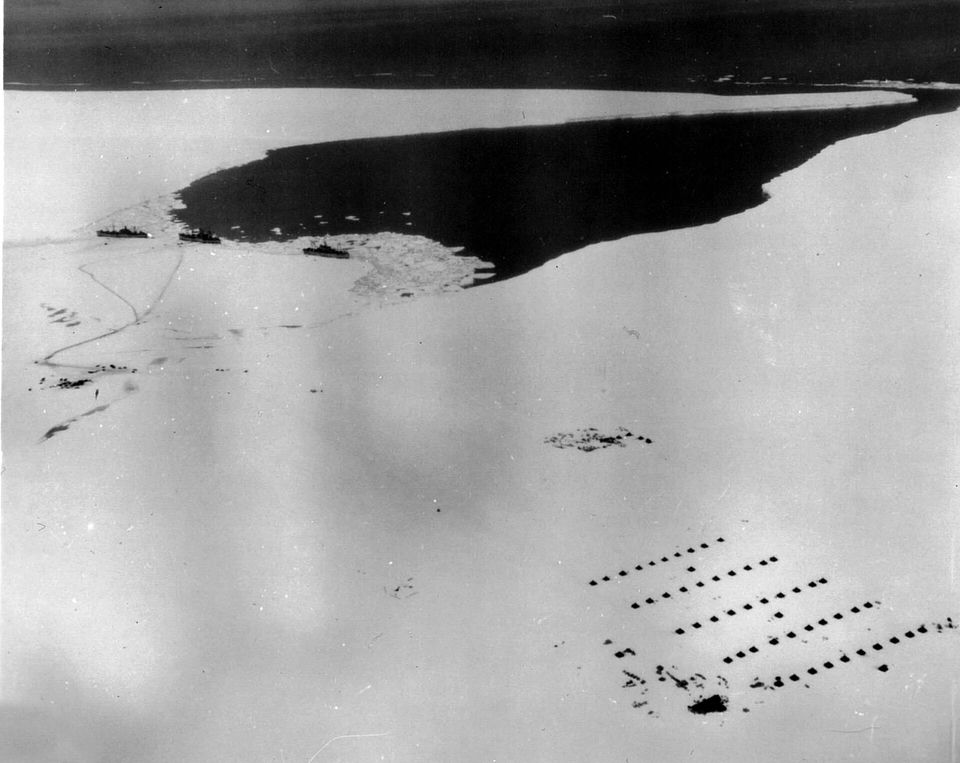
Its main mission was to set up the base Little America IV on the Ross Ice Shelf; the central group reached the Bay of Whales on 15 January 1947 and began building it.
- Operation Highjump, Wikipedia
HIGHJUMP's mission was to establish Little America IV on the Ross Ice Shelf
- Hitler's Antarctic Fortress Unmasked (Skeptoid #559), Skeptoid (Brian Dunning), 21 February 2017
establish the research base Little America IV
- Operation Highjump, Wikipedia
- Verified fact
Among its stated objectives were cold-weather training, mapping and consolidating and extending potential U.S. sovereignty over the largest practicable area.
- Operation Highjump, Wikipedia
Consolidating and extending potential United States sovereignty over the largest practicable area
- Operation Highjump, Wikipedia
- Verified fact
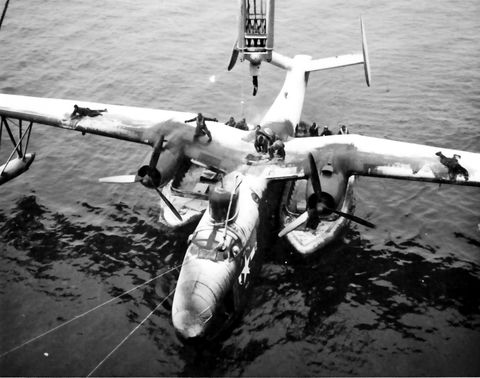
On the flying-boat crash "George 1" on Thurston Island in December 1946, three men died: Ensign Maxwell A. Lopez and aviation radiomen Wendell K. Henderson and Frederick W. Williams; the other six crew members were rescued 13 days later.
- Operation Highjump, Wikipedia
crashed on Thurston Island killing Ensign Maxwell A. Lopez, ARM1 Wendell K. Henderson, and ARM1 Frederick W. Williams.
- Operation Highjump, 1946-47: Expedition to Explore Antarctica from the Air, HistoryNet (Jim Trautman), 6 August 2021
became involved in what is known as an "ice blink,"
- Operation Highjump, Wikipedia
- Verified fact
The expedition produced a huge photographic record, more than 70,000 photos, but without fixed ground points it was hard to use; Operation Windmill (1947-1948) returned to supply that ground control.
- Operation Highjump, Wikipedia
returned to the area in order to provide ground-truthing to the aerial photography of HIGHJUMP
- Operation Highjump, 1946-47: Expedition to Explore Antarctica from the Air, HistoryNet (Jim Trautman), 6 August 2021
more than 70,000 photos had been taken
- Operation Windmill, south-pole.com
get ground control for photographs taken during OPERATION HIGHJUMP
- Operation Highjump, Wikipedia
- Verified fact
The expedition ended because of the early approach of winter and worsening weather; only five days were favourable for flying in February 1947.
- Operation Highjump, Wikipedia
the expedition was terminated due to the early approach of winter and worsening weather conditions.
- Operation Highjump, 1946-47: Expedition to Explore Antarctica from the Air, HistoryNet (Jim Trautman), 6 August 2021
only five days were favorable for flying in February.
- Operation Highjump, Wikipedia
- Verified fact
In an interview published in El Mercurio on 5 March 1947, Byrd said the United States could be attacked by planes flying over one or both poles.
- Operation Highjump, Wikipedia
The interview appeared in the Wednesday, March 5, 1947, edition of the Chilean newspaper El Mercurio
- Operation Highjump, Wikipedia
- Verified fact
The Navy's documentary of the expedition, The Secret Land, filmed by military cameramen, won the 1948 Academy Award for Best Documentary Feature.
- Operation Highjump, Wikipedia
It won the 1948 Academy Award for Best Documentary Feature Film.
- Operation Highjump, Wikipedia