
Summary
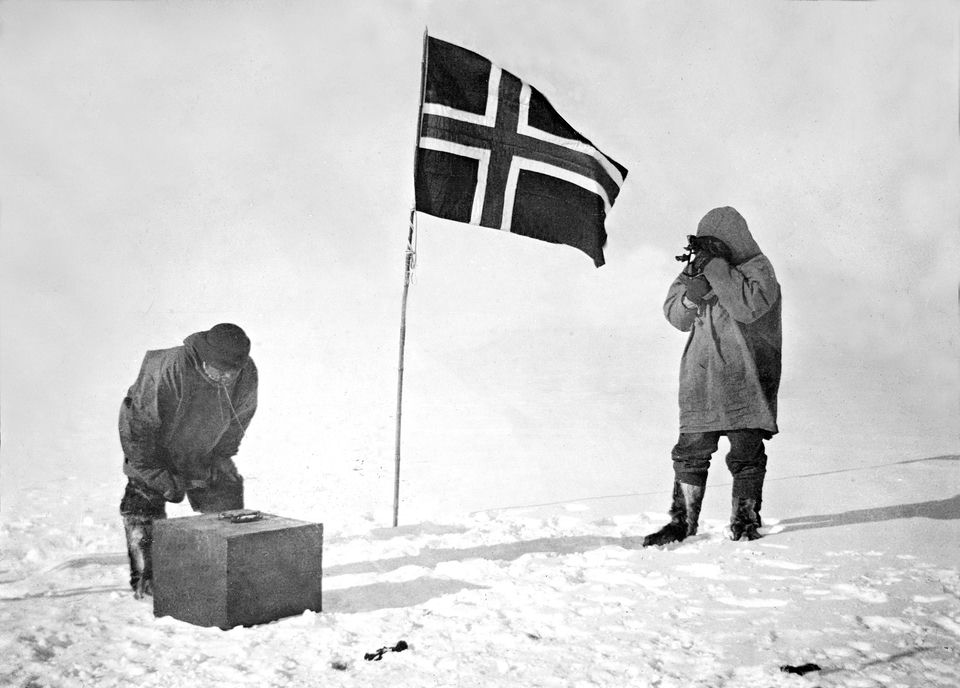
Against the image of a sealed wall, this sheet sets out what is documented about Antarctica. It is a continent of about 14.2 million km², mostly buried under an ice sheet 1.9 km thick on average, with roughly 17,968 km of coastline. People have crossed it, lived on it and flown over it for more than a century. Roald Amundsen and four companions reached the South Pole on 14 December 1911, setting out from their Framheim base on the Great Ice Barrier; Robert Falcon Scott's party arrived on 17 January 1912 and died on the way back. In 1958 the Commonwealth Trans-Antarctic Expedition led by Vivian Fuchs, with Edmund Hillary's support team, made the first overland crossing via the Pole: 3,473 km in 99 days. The US Amundsen–Scott station has been occupied at the Pole without a break since 1956.
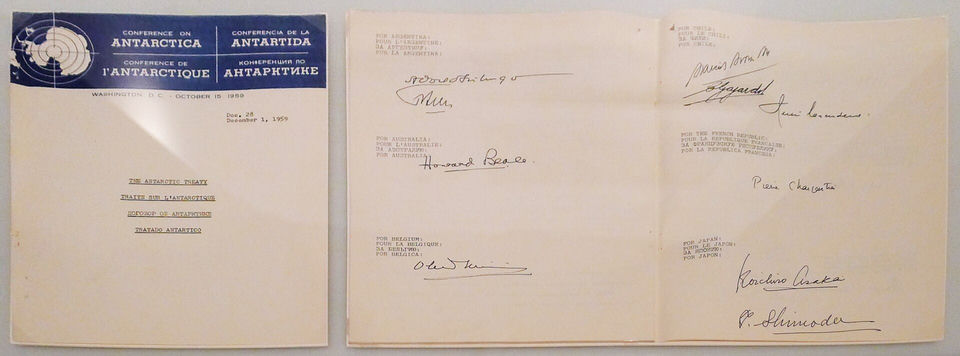
The Antarctic Treaty, signed in Washington on 1 December 1959 by twelve countries and in force since 1961, now has 58 Parties. It keeps the continent for peaceful purposes, bans military bases, manoeuvres, weapons tests, nuclear explosions and radioactive waste, and guarantees freedom of scientific research south of 60° South. Access is regulated, not forbidden: sightseeing flights have overflown the continent since February 1977, and IAATO, the association of Antarctic tour operators, counted 122,072 visitors in the 2023–24 season.
Verified facts
- Verified fact
Antarctica is a continent of about 14.2 million km², mostly covered by an ice sheet averaging 1.9 km thick, with roughly 17,968 km of coastline.
- Antarctica, Wikipedia
has an area of 14,200,000 km2 (5,500,000 sq mi).
- List of countries by length of coastline, Wikipedia
Antarctica (Disputed) 17,968 14,200,000 1.27
- Antarctica, Wikipedia
- Verified fact
The Antarctic Treaty was signed in Washington on 1 December 1959 by twelve countries, entered into force on 23 June 1961 and now has 58 Parties.
- Antarctic Treaty System, Wikipedia
The main treaty was opened for signature on 1 December 1959, and officially entered into force on 23 June 1961.
- Traité sur l'Antarctique, Wikipedia
signé le 1er décembre 1959 à Washington, D.C. aux États-Unis et en vigueur depuis le 23 juin 1961
- The Antarctic Treaty, Secretariat of the Antarctic Treaty
signed in Washington on 1 December 1959 by the twelve countries
- Antarctic Treaty System, Wikipedia
- Verified fact
The Treaty reserves Antarctica for peaceful purposes: it bans military bases, manoeuvres and weapons tests as well as nuclear explosions and radioactive waste, guarantees freedom of scientific investigation and applies south of 60° South, ice shelves included.
- The Antarctic Treaty (full text, 1959), Secretariat of the Antarctic Treaty, 1 December 1959
Antarctica shall be used for peaceful purposes only. There shall be prohibited, inter alia, any measures of a military nature, such as the establishment of military bases and fortifications, the carrying out of military maneuvers, as well as the testing of any type of weapons.
- Traité sur l'Antarctique, Wikipedia
Toute mesure de nature militaire et non pacifique y est interdite.
- The Antarctic Treaty (full text, 1959), Secretariat of the Antarctic Treaty, 1 December 1959
- Verified fact
Roald Amundsen and four companions reached the South Pole on 14 December 1911, starting from their Framheim base on the Great Ice Barrier; Robert Falcon Scott and four men got there on 17 January 1912 and all died on the way back, by 29 March.
- Amundsen's South Pole expedition, Wikipedia
made it to the geographical South Pole on 14 December 1911
- Amundsen's South Pole expedition, Wikipedia
- Verified fact
The Commonwealth Trans-Antarctic Expedition, led by Vivian Fuchs with Edmund Hillary's support team, made the first overland crossing of Antarctica via the South Pole: 3,473 km in 99 days, arriving at Scott Base on 2 March 1958.
- Commonwealth Trans-Antarctic Expedition, Wikipedia
successfully completed the first overland crossing of Antarctica, via the South Pole.
- Commonwealth Trans-Antarctic Expedition, Wikipedia
- Verified fact
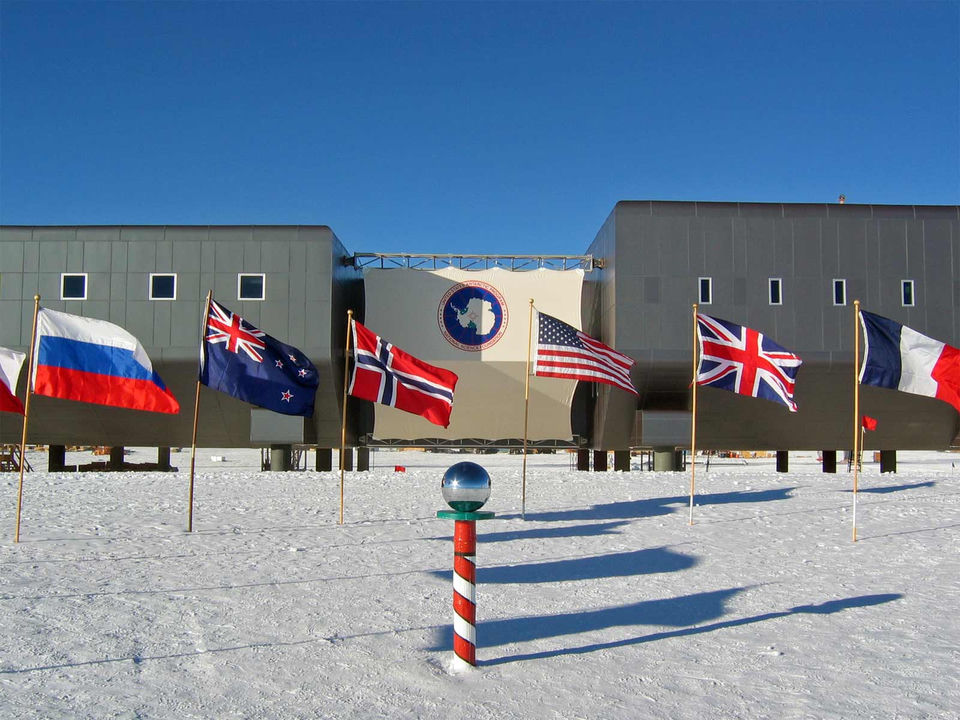
The US Amundsen–Scott station, built at the South Pole in November 1956, has been occupied without interruption ever since; in summer about 5,000 people live at the continent's research stations, around 1,000 in winter.
- Amundsen–Scott South Pole Station, Wikipedia
built by Navy Seabees for the federal government of the United States during November 1956
- Antarctica, Wikipedia
During the summer months, about 5,000 people reside at research stations, a figure that drops to around 1,000 in the winter.
- Amundsen–Scott South Pole Station, Wikipedia
- Verified fact
Sightseeing flights have overflown Antarctica since February 1977 (Qantas on the 13th, Air New Zealand on the 15th); in 1979 Air New Zealand Flight 901 crashed on Mount Erebus, killing 257; today Boeing 787s from Australia spend up to 4 hours over the continent.
- Air New Zealand Flight 901, Wikipedia
killing all 237 passengers and 20 crew on board
- Tourism in Antarctica, Wikipedia
Qantas operated its first Antarctic flight on 13 February 1977.
- Antarctica in a Day – The World's Most Unique Scenic Flight, Antarctica Flights
up to 4 hours over the white continent
- Air New Zealand Flight 901, Wikipedia
- Verified fact
According to IAATO, the association of Antarctic tour operators, Antarctica received 122,072 visitors in the 2023–24 season.
- Tourism in Antarctica, Wikipedia
By 2025, the number of cruise visitors travelling to Antarctica each year reached 124,000.
- Report of the International Association of Antarctica Tour Operators 2023-24 (ATCM46 IP101), IAATO, 2024
The total number of visitors in the 2023-24 season was 122,072 which was higher than the preliminary estimates provided at ATCM XLV.
- Tourism in Antarctica, Wikipedia


United Nations