
Summary
The modern belief in a flat Earth has a traceable origin. The English writer Samuel Rowbotham launched it with the 1849 pamphlet Zetetic Astronomy. In 1893 Lady Elizabeth Blount founded the Universal Zetetic Society, and in 1956 Samuel Shenton set up in Dover, England, the International Flat Earth Research Society, better known as the Flat Earth Society, as its direct descendant. Shenton met the space age with scepticism: when satellite images showed a sphere, he remarked that such a photograph could fool the untrained eye. After his death in 1971, Charles K. Johnson, a correspondent from California, took over; under him the society grew to a reported 3,500 members. It was resurrected around a web forum in 2004 and officially relaunched in October 2009.
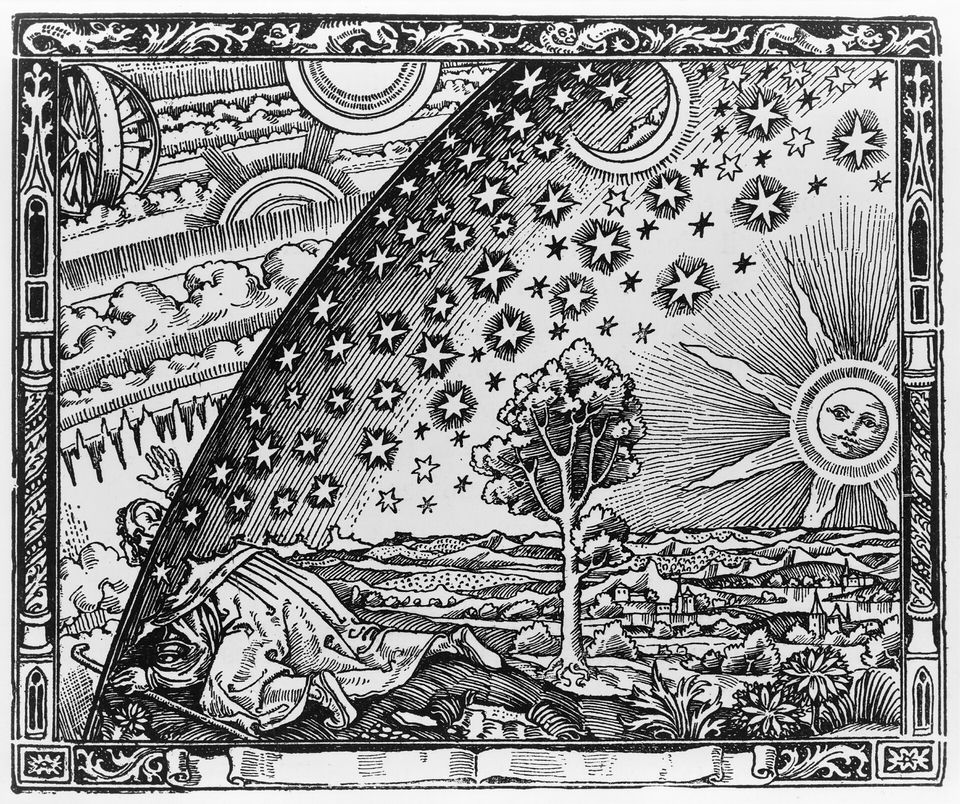
A second story runs alongside: the claim that medieval people believed in a flat Earth. Historians describe it as a myth. According to Stephen Jay Gould there never was a period of flat Earth darkness among scholars, and Jeffrey Burton Russell dates the flat-Earth error to between 1870 and 1920, blaming popular histories, among them Washington Irving's 1828 Columbus biography, mistaken by many for scholarship. The real dispute of the 1490s concerned the size of the Earth, not its shape.
Verified facts
- Verified fact
The modern pseudoscientific belief in a flat Earth originated with the English writer Samuel Rowbotham and his 1849 pamphlet Zetetic Astronomy.
- Flat Earth, Wikipedia
the pseudoscientific belief in a flat Earth originated with the English writer Samuel Rowbotham with the 1849 pamphlet Zetetic Astronomy.
- Flat Earth, Wikipedia
- Verified fact
Lady Elizabeth Blount founded the Universal Zetetic Society in 1893; in 1956 Samuel Shenton set up the Flat Earth Society in Dover, England, as its direct descendant.
- Flat Earth, Wikipedia
In 1956, Samuel Shenton set up the International Flat Earth Research Society, better known as the "Flat Earth Society" in Dover, England, as a direct descendant of the Universal Zetetic Society.
- Flat Earth, Wikipedia
- Verified fact
When satellite images showed the Earth as a sphere, Shenton remarked: "It's easy to see how a photograph like that could fool the untrained eye".
- Flat Earth Society, Wikipedia
It's easy to see how a photograph like that could fool the untrained eye
- Flat Earth Society, Wikipedia
- Verified fact
Charles K. Johnson inherited part of Shenton's library after Shenton's death in 1971, and under his leadership the Flat Earth Society grew to a reported 3,500 members.
- Flat Earth Society, Wikipedia
Over the next three decades, under his leadership, the Flat Earth Society grew to a reported 3,500 members.
- Flat Earth Society, Wikipedia
- Verified fact
The society was resurrected around a web discussion forum in 2004 and officially relaunched in October 2009.
- Flat Earth Society, Wikipedia
This eventually led to the official relaunch of the society in October 2009
- Flat Earth Society, Wikipedia
- Verified fact
According to Stephen Jay Gould, there never was a period of "flat Earth darkness" among scholars: Greek knowledge of the Earth's sphericity never faded.
- Myth of the flat Earth, Wikipedia
there never was a period of 'flat Earth darkness' among scholars
- Myth of the flat Earth, Wikipedia
- Verified fact
Historian Jeffrey Burton Russell says the flat-Earth error flourished most between 1870 and 1920, and ascribes the popularization of the myth to histories by John William Draper, Andrew Dickson White and Washington Irving.
- Myth of the flat Earth, Wikipedia
the flat-Earth error flourished most between 1870 and 1920
- Myth of the flat Earth, Wikipedia
- Verified fact
Washington Irving's romanticized 1828 biography of Columbus invented a debate in which ignorant members of a commission objected to a round Earth; in fact, the issue in the 1490s was the size of the Earth, not its shape.
- Myth of the flat Earth, Wikipedia
The issue in the 1490s was not the shape of the Earth, but its size
- Myth of the flat Earth, Wikipedia