
Summary
The roundness of the Earth is not a modern discovery. The concept is documented from the fifth century BC in the writings of Greek philosophers, and in the third century BC Hellenistic astronomy established the roughly spherical shape of the Earth as a physical fact. Eratosthenes, later chief librarian at Alexandria, is best remembered as the first known person to calculate its circumference: comparing the shadows cast at noon on the summer solstice at Alexandria and at Syene, he measured an angle of about 7.2 degrees, one fiftieth of a circle. His method was sound, though two false assumptions fortuitously cancelled each other out.
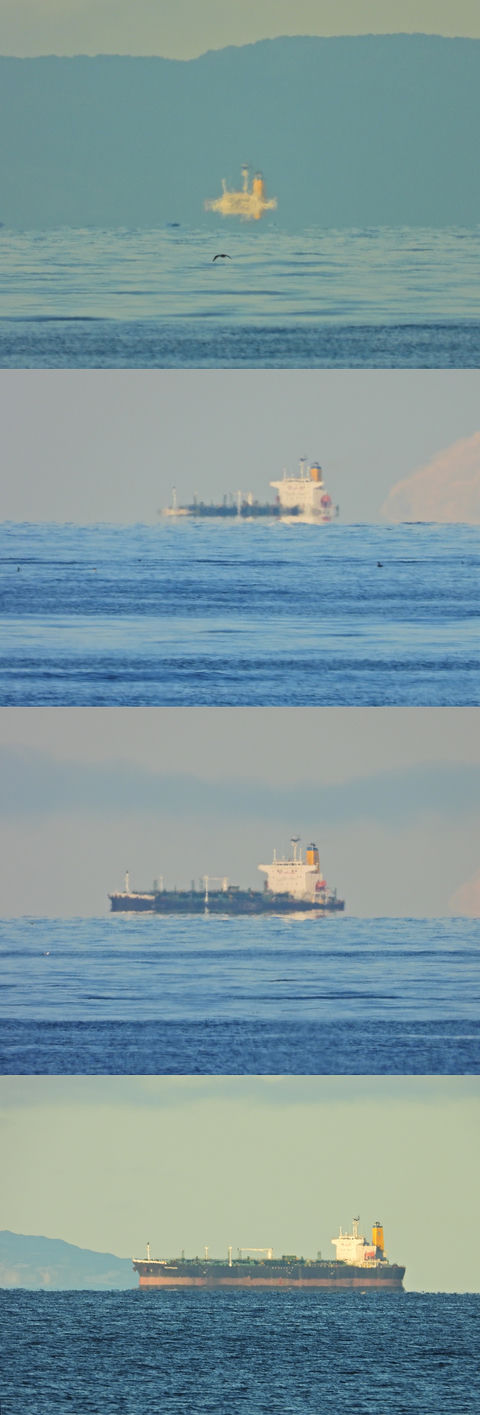
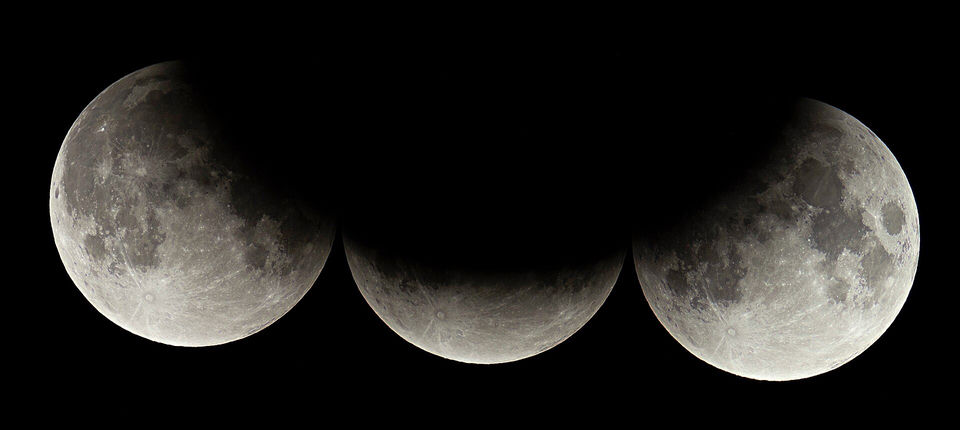
Other lines of evidence accumulated. Since at least the time of Aristotle, people have noted that the Earth's shadow on the Moon during a partial lunar eclipse is circular. Ferdinand Magellan and Juan Sebastián Elcano's expedition circumnavigated the globe between 1519 and 1522. A sequence of photographs taken at the Strait of Magellan shows a tanker rising over the horizon, and the encyclopaedic list of effects that together disprove a flat Earth also includes gravity and weather systems. In July 2015, NASA released the first view of the entire sunlit side of the Earth from the DSCOVR satellite, a million miles away.
Verified facts
- Verified fact
Ferdinand Magellan and Juan Sebastián Elcano's expedition achieved the first practical demonstration of the Earth's sphericity by circumnavigating the globe between 1519 and 1522.
- Spherical Earth, Wikipedia
A practical demonstration of Earth's sphericity was achieved by Ferdinand Magellan and Juan Sebastián Elcano's circumnavigation (1519–1522).
- Spherical Earth, Wikipedia
- Verified fact
A sequence of photographs at the Strait of Magellan shows a 186 m tanker rising over the horizon; at about 18 km the theoretical horizon drop would be about 23 m.
- Spherical Earth, Wikipedia
Distance at first picture is about 18 km which would imply a theoretical horizon vertical drop of about 23 meters.
- Spherical Earth, Wikipedia
- Verified fact
Many independent observations show the roughly spherical shape of the Earth, among them lunar eclipses, the visibility of distant objects, the sky seen from different locations and altitudes, surface navigation, weather systems and gravity.
- Spherical Earth, Wikipedia
The spherical shape causes a number of effects and phenomena that when combined disprove flat Earth beliefs.
- Spherical Earth, Wikipedia

Official version
- Official version
The sphericity of the Earth is documented from the fifth century BC in the writings of Greek philosophers, and in the third century BC Hellenistic astronomy established it as a physical fact and calculated the Earth's circumference.
- Spherical Earth, Wikipedia
In the 3rd century BC, Hellenistic astronomy established the roughly spherical shape of Earth as a physical fact and calculated the Earth's circumference.
- Spherical Earth, Wikipedia
- Official version
Eratosthenes, chief librarian at the Library of Alexandria, is best remembered as the first known person to calculate the Earth's circumference.
- Eratosthenes, Wikipedia
He is best remembered as the first known person to calculate the Earth's circumference.
- Eratosthenes, Wikipedia
- Official version
Eratosthenes compared noon shadows at Alexandria and Syene on the summer solstice, found an angle of about 7.2 degrees, or 1/50 of a circle, and multiplied the distance between the cities by 50; his method was sound, though two false assumptions cancelled each other out.
- Eratosthenes, Wikipedia
While Eratosthenes' method was sound he made two false assumptions which fortuitously cancelled each other out.
- Eratosthenes, Wikipedia
- Official version
Since at least the time of Aristotle, people have noted that the Earth's dark shadow on the Moon during a partial lunar eclipse is circular, although never a whole circle.
- APOD: 2026 August 25 - Earth's Shadow Visualized with Lunar Eclipses, NASA Science, 25 August 2026
Since at least the time of Aristotle, people have noted that Earth's dark shadow on the Moon during a partial lunar eclipse is circular -- although never a whole circle.
- APOD: 2026 August 25 - Earth's Shadow Visualized with Lunar Eclipses, NASA Science, 25 August 2026
- Official version
In July 2015 NASA's Earth Observatory reported that the DSCOVR satellite, a million miles from Earth, had returned its first view of the entire sunlit side of the planet; other satellites had captured full-disc views before.
- An EPIC New View of Earth, NASA Earth Observatory, July 2015
From one million miles away, the DSCOVR satellite returned its first view of the entire sunlit side of Earth.
- An EPIC New View of Earth, NASA Earth Observatory, July 2015
NASA
NASA Earth