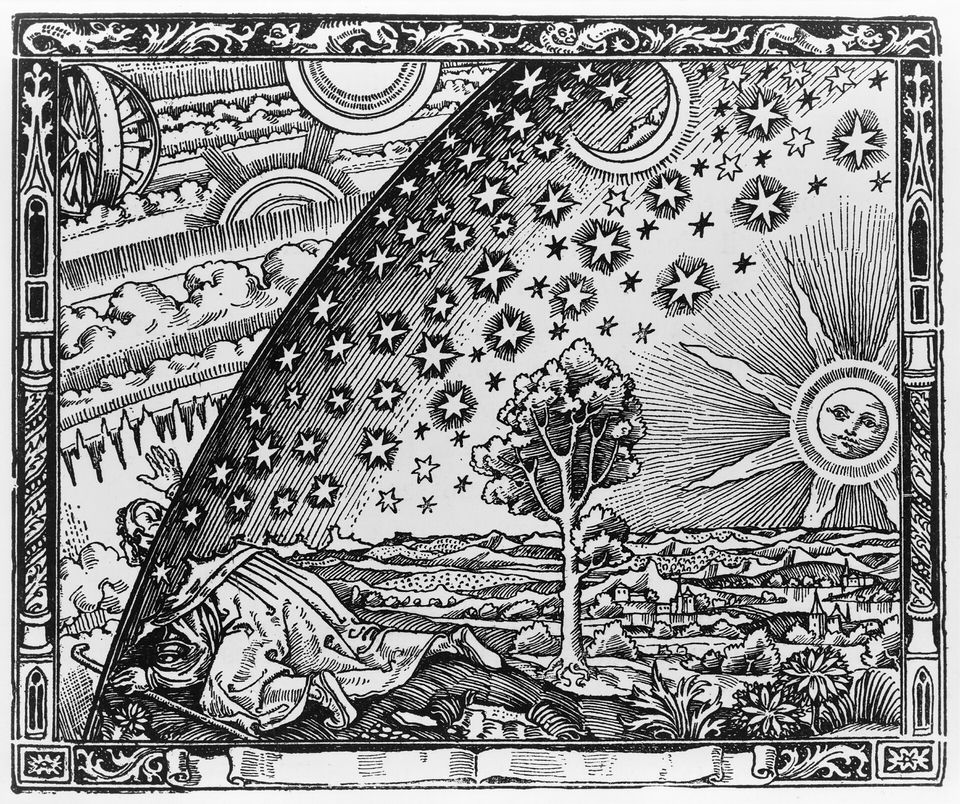

Résumé
La croyance moderne à une Terre plate a une origine traçable. L'écrivain anglais Samuel Rowbotham la lance avec le pamphlet Zetetic Astronomy, en 1849. En 1893, Lady Elizabeth Blount fonde la Universal Zetetic Society, et en 1956 Samuel Shenton crée à Douvres, en Angleterre, l'International Flat Earth Research Society, plus connue comme la Flat Earth Society, en descendante directe de la précédente. Shenton accueille l'ère spatiale avec scepticisme : quand les images satellites montrent une sphère, il remarque qu'une telle photographie peut tromper un œil non averti. Après sa mort en 1971, Charles K. Johnson, correspondant californien, prend le relais ; sous sa direction, la société atteint 3 500 membres selon ses dires. Elle est ressuscitée autour d'un forum web en 2004, puis officiellement relancée en octobre 2009.
Une seconde histoire court en parallèle : l'idée que les gens du Moyen Âge croyaient à une Terre plate. Les historiens y voient un mythe. Selon Stephen Jay Gould, il n'y a jamais eu d'âge des ténèbres de la Terre plate chez les savants, et Jeffrey Burton Russell situe l'erreur de la Terre plate entre 1870 et 1920, en en rendant responsables des histoires populaires, dont la biographie de Colomb publiée par Washington Irving en 1828, prise par beaucoup pour un ouvrage savant. La vraie dispute des années 1490 portait sur la taille de la Terre, non sur sa forme.
Faits vérifiés
- Fait vérifié
La croyance pseudo-scientifique moderne en une Terre plate est née avec l'écrivain anglais Samuel Rowbotham et son pamphlet de 1849, Zetetic Astronomy.
- Flat Earth, Wikipedia
the pseudoscientific belief in a flat Earth originated with the English writer Samuel Rowbotham with the 1849 pamphlet Zetetic Astronomy.
- Flat Earth, Wikipedia
- Fait vérifié
Lady Elizabeth Blount a fondé la Universal Zetetic Society en 1893 ; en 1956, Samuel Shenton a créé la Flat Earth Society à Douvres, en Angleterre, comme sa descendante directe.
- Flat Earth, Wikipedia
In 1956, Samuel Shenton set up the International Flat Earth Research Society, better known as the "Flat Earth Society" in Dover, England, as a direct descendant of the Universal Zetetic Society.
- Flat Earth, Wikipedia
- Fait vérifié
Quand les images satellites ont montré la Terre comme une sphère, Shenton a remarqué : « Il est facile de voir comment une telle photographie peut tromper un œil non averti ».
- Flat Earth Society, Wikipedia
It's easy to see how a photograph like that could fool the untrained eye
- Flat Earth Society, Wikipedia
- Fait vérifié
Charles K. Johnson a hérité d'une partie de la bibliothèque de Shenton après sa mort en 1971, et sous sa direction la Flat Earth Society est montée à 3 500 membres selon ses dires.
- Flat Earth Society, Wikipedia
Over the next three decades, under his leadership, the Flat Earth Society grew to a reported 3,500 members.
- Flat Earth Society, Wikipedia
- Fait vérifié
La société a été ressuscitée autour d'un forum de discussion en ligne en 2004, puis officiellement relancée en octobre 2009.
- Flat Earth Society, Wikipedia
This eventually led to the official relaunch of the society in October 2009
- Flat Earth Society, Wikipedia
- Fait vérifié
Selon Stephen Jay Gould, il n'y a jamais eu de période d'« obscurité de la Terre plate » chez les savants : la connaissance grecque de la sphéricité de la Terre ne s'est jamais perdue.
- Myth of the flat Earth, Wikipedia
there never was a period of 'flat Earth darkness' among scholars
- Myth of the flat Earth, Wikipedia
- Fait vérifié
L'historien Jeffrey Burton Russell estime que l'erreur de la Terre plate a fleuri surtout entre 1870 et 1920, et attribue la popularisation du mythe aux histoires de John William Draper, Andrew Dickson White et Washington Irving.
- Myth of the flat Earth, Wikipedia
the flat-Earth error flourished most between 1870 and 1920
- Myth of the flat Earth, Wikipedia
- Fait vérifié
La biographie romancée de Colomb par Washington Irving (1828) a inventé un débat où des membres ignorants d'une commission s'opposaient à une Terre ronde ; en réalité, l'enjeu des années 1490 était la taille de la Terre, non sa forme.
- Myth of the flat Earth, Wikipedia
The issue in the 1490s was not the shape of the Earth, but its size
- Myth of the flat Earth, Wikipedia