
Summary
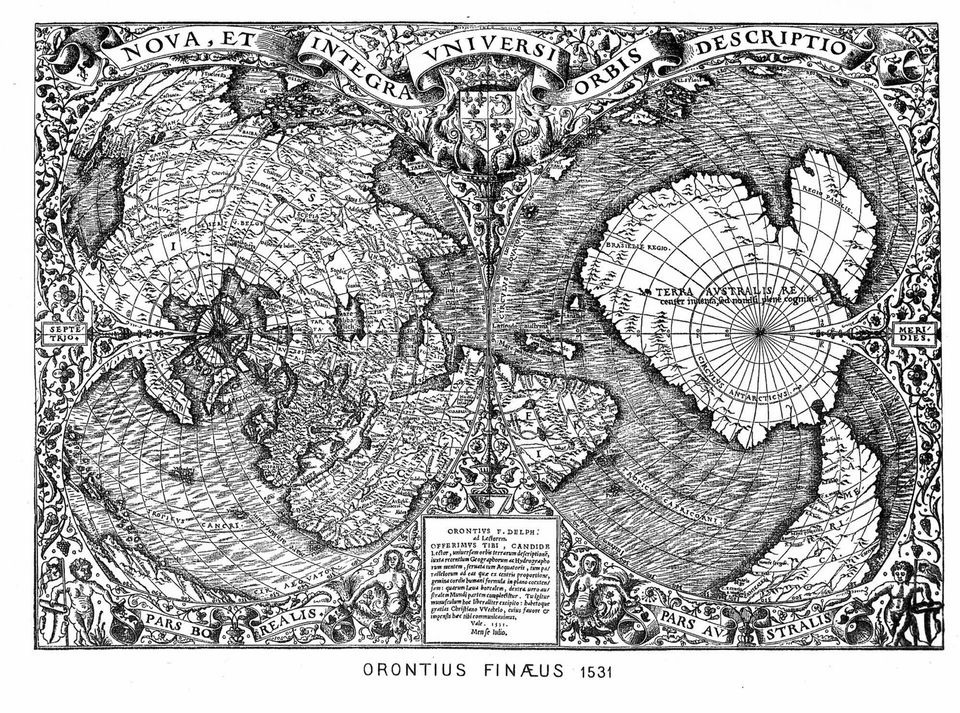
The first sheet depends on one date: an Antarctica, or at least a part of it, free of ice at the end of the last Ice Age, around 9,600 or 10,450 BC. Geology tells a different story. Hapgood himself assumed an Antarctic warm period during the northern glaciation, but later research on the paleoclimate and ice sheets of Antarctica discredited it, and recent ice-core data show that the continent was last free of ice over ten million years ago. The icing escalated about 34 million years ago, and tundra lingered until roughly 14 to 10 million years ago. The ice itself keeps a record: the Dome C core goes back 740,000 years and reveals eight earlier glacial cycles, and the ice above Lake Vostok holds a continuous climate record of 400,000 years. Humans, for their part, are far more recent: the ice shelves were probably first seen in 1820 and the first confirmed landing dates to 1895. Between the last ice-free land and the first human visit there is therefore a gap of millions of years, not a few thousand. The idea that people mapped ice-free Antarctic coasts, or lived on them, contradicts this timeline.
What the thesis says
The sources show where these claims circulate, not that they are true.
- Thesis
The thesis dates an ice-free Antarctica to the end of the last Ice Age: Hapgood placed a 15° pole shift around 9,600 BC, and Hancock dates a major pole shift to 10,450 BC.
- Charles Hapgood, Wikipedia
He used that to propose that a 15° pole shift occurred around 9,600 BC (approx. 11,600 years ago) and that a part of the Antarctic was ice-free at that time and that an ice-age civilization could have mapped the coast.
- Fingerprints of the Gods, Wikipedia
Hancock dates a major pole shift to 10,450 BC.
- Charles Hapgood, Wikipedia
Verified facts
- Verified fact
Later research on the paleoclimatology and ice sheets of Antarctica discredited Hapgood's interpretation that any part of the continent had been ice-free at or before 9,600 BC.
- Charles Hapgood, Wikipedia
Later research concerning the paleoclimatology and ice sheets of Antarctica have discredited the interpretations by Hapgood that an Antarctic warm period coincided with the last glacial period in the Northern Hemisphere and that any part of it had been ice-free at and prior to 9,600 BC (approx. 11,600 years ago).
- Piri Reis map, Wikipedia
Hapgood's book was met with skepticism due to its lack of evidence and reliance on polar shift.
- Charles Hapgood, Wikipedia
- Verified fact
Ice core data show that Antarctica was last free of ice over ten million years ago.
- Piri Reis map, Wikipedia
More recent ice core data shows that Antarctica was last free of ice over ten million years ago.
- Piri Reis map, Wikipedia
- Verified fact
The icing of Antarctica escalated about 34 million years ago, and tundra ecosystems lasted until around 14 to 10 million years ago.
- Antarctic ice sheet, Wikipedia
escalated during the Eocene–Oligocene extinction event about 34 million years ago
- Antarctica, Wikipedia
Tundra ecosystems continued to exist on Antarctica until around 14–10 million years ago, when further cooling lead to their extermination.
- Antarctic ice sheet, Wikipedia
- Verified fact
The Dome C ice core of the EPICA project goes back 740,000 years and reveals eight previous glacial cycles, and the ice above Lake Vostok provides a continuous paleoclimatic record of 400,000 years.
- EPICA, Wikipedia
The core goes back 740,000 years and reveals 8 previous glacial cycles.
- Lake Vostok, Wikipedia
The overlying ice provides a continuous paleoclimatic record of 400,000 years
- EPICA, Wikipedia
- Verified fact
The first confirmed landing on Antarctica was by a Norwegian team in 1895; the ice shelves were probably first seen in 1820.
- Antarctica, Wikipedia
The first confirmed landing was by a Norwegian team in 1895.
- Antarctica, Wikipedia