
Summary
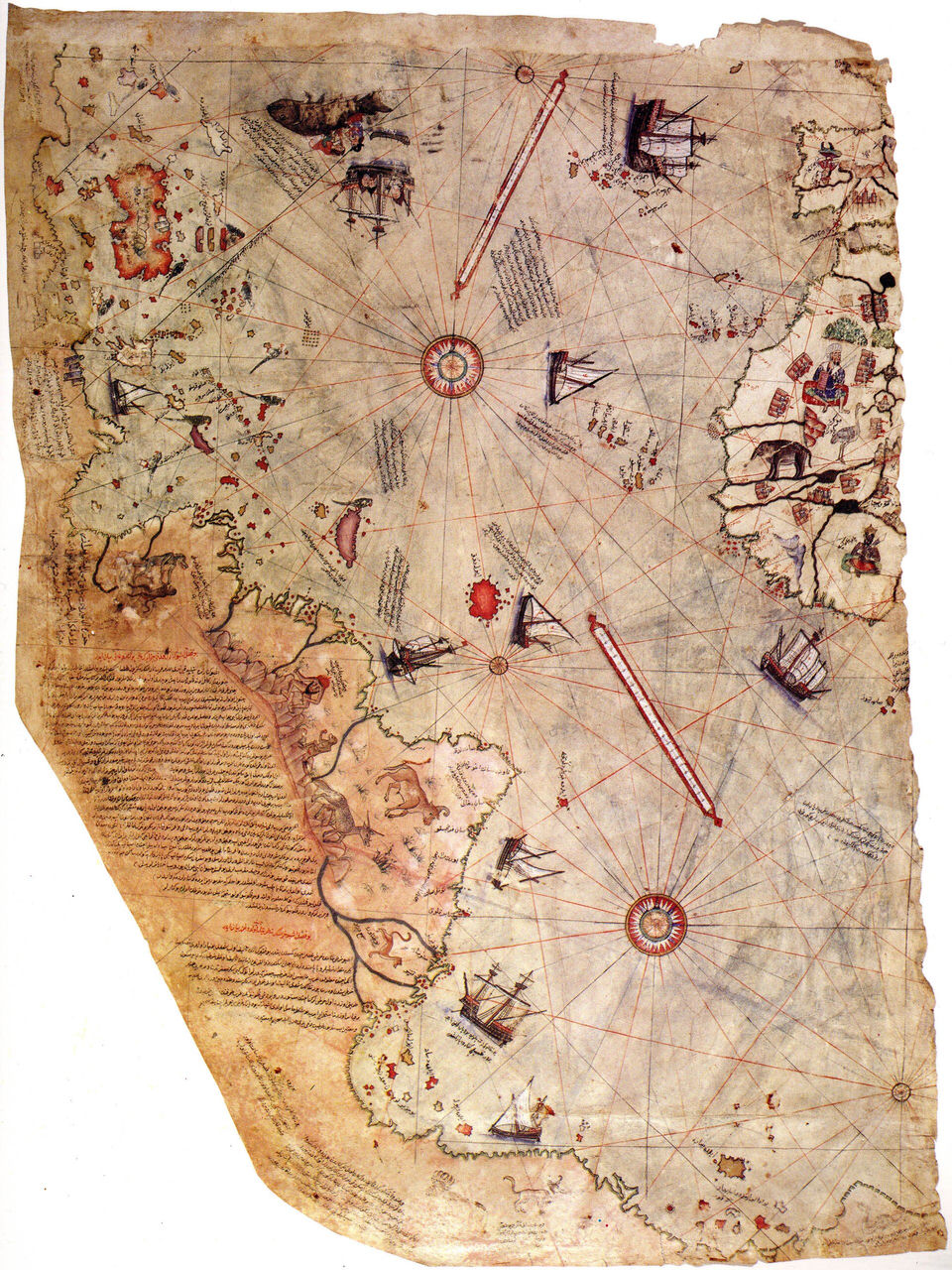
This sheet follows the best-known version of the thesis: that Antarctica was once a habitable land, home to an advanced civilization of the last Ice Age, whose traces were later buried by ice. It begins with Captain Arlington Mallery, who said the Piri Reis map of 1513 seemed to show the Antarctic coast. The American historian Charles Hapgood took the idea up with his students at Keene State College, spent seven years on it, and published Maps of the Ancient Sea Kings in 1966, arguing that Piri Reis and Oronce Finé had copied older charts drawn when part of the continent was free of ice. For this he leaned on his own theory of a sudden shift of the Earth's crust, to which Albert Einstein had contributed a foreword in 1958. The idea reached a mass audience when Erich von Däniken's Chariots of the Gods borrowed it. In 1995 Rand and Rose Flem-Ath placed Atlantis in Antarctica, and Graham Hancock's Fingerprints of the Gods made the continent the cradle of a society whose survivors taught the first civilizations. His Netflix series Ancient Apocalypse (2022) revived the same narrative and accuses archaeologists of ignoring the evidence. All of this is a thesis, and the following sheets set it against what is known.
What the thesis says
The sources show where these claims circulate, not that they are true.
- Thesis
In Maps of the Ancient Sea Kings (1966), Hapgood proposed that part of the Piri Reis map depicts Queen Maud Land, that a 15° pole shift occurred around 9,600 BC, and that an ice-age civilization could have mapped an ice-free Antarctic coast.
- Charles Hapgood, Wikipedia
He used that to propose that a 15° pole shift occurred around 9,600 BC (approx. 11,600 years ago) and that a part of the Antarctic was ice-free at that time and that an ice-age civilization could have mapped the coast.
- Charles Hapgood, Wikipedia
- Thesis
Rand and Rose Flem-Ath's When the Sky Fell (1995), republished as Atlantis beneath the ice, expands on Hapgood's argument and places Atlantis in Antarctica.
- Fingerprints of the Gods, Wikipedia
The geological community rejects his model in favour of plate tectonics, yet Rand and Rose Flem-Ath adopted it in When the Sky Fell: in Search of Atlantis (1995/2009), expanding on Hapgood's argument and placing Atlantis in Antarctica.
- Rand Flem-Ath, Wikipedia
(originally published in 1995 as When the Sky Fell: In Search of Atlantis)
- Fingerprints of the Gods, Wikipedia
- Thesis
In Fingerprints of the Gods (1995), Graham Hancock claims that an advanced civilization lived on Antarctica during the last ice age before the continent shifted south, and that survivors carried its knowledge to the cultures that produced the earliest known civilizations.
- Fingerprints of the Gods, Wikipedia
Hancock claims that an advanced civilization lived on Antarctica during the last ice age before the continent shifted south to its current position.
- Fingerprints of the Gods, Wikipedia
- Thesis
The Netflix series Ancient Apocalypse (2022) has Hancock present an advanced ice-age civilization destroyed by meteor impacts around 12,000 years ago, and repeatedly allege that archaeologists are ignoring or covering up the evidence.
- Ancient Apocalypse, Wikipedia
the British writer Graham Hancock presents his pseudoarchaeological theory that there was an advanced civilization during the last ice age and that it was destroyed as a result of meteor impacts around 12,000 years ago.
- Ancient Apocalypse, Wikipedia
Unconfirmed accounts
- Unofficial, unconfirmed
Hapgood reproduced letters from a U.S. Air Force cartography section stating that its staff had studied the Piri Reis and Finé maps off duty and found both derived from source maps of a relatively ice-free Antarctica; the letters circulate only through his book.
- Charles Hapgood, Wikipedia
These letters say that at Hapgood's request, they had studied both Piri Reis and Oronce Finé maps during their off-duty hours, concluding that both were compiled from original source maps of Antarctica at a time when it was relatively free of ice, supporting Hapgood's findings.
- Charles Hapgood, Wikipedia
Verified facts
- Verified fact
The claim that the Piri Reis map shows Antarctica originates with Captain Arlington H. Mallery, an amateur archaeologist; in 1954 Charles Hapgood set his Keene State College class to examine the map, and he and his students spent seven years on it.
- Piri Reis map, Wikipedia
The Antarctic claim originates with Captain Arlington H. Mallery, a civil engineer and amateur archaeologist who was a supporter of pre-Columbian trans-oceanic contact hypotheses.
- Piri Reis and the Hapgood Hypotheses, Aramco World (Paul F. Hoye, Paul Lunde), January 1980
he and his students eventually spent seven years on the project.
- Piri Reis map, Wikipedia
- Verified fact
Hapgood's 1958 book The Earth's Shifting Crust, on which his pole-shift argument rests, carried a foreword by Albert Einstein; Hapgood later revised it as The Path of the Pole.
- Charles Hapgood, Wikipedia
The book included a foreword by Albert Einstein.
- Charles Hapgood, Wikipedia
- Verified fact
Hapgood's hypotheses became widely known when Erich von Däniken's best-seller Chariots of the Gods incorporated them, two years after Maps of the Ancient Sea Kings.
- Piri Reis and the Hapgood Hypotheses, Aramco World (Paul F. Hoye, Paul Lunde), January 1980
Two years later those hypotheses became unexpectedly famous when they were incorporated in the controversial best-seller Chariots of the Gods.
- Piri Reis and the Hapgood Hypotheses, Aramco World (Paul F. Hoye, Paul Lunde), January 1980
Netflix